“I Was Here”: Reflecting On Your Year
A column by David Arnold about end-of-year retrospectives. Plus, this month’s podcast roundup!
As December begins, we’re often encouraged to think about what this past year has meant for us and the things we did. Ultimately, this ends up being a time to remember “I was here.”
For some folks, this reflection includes report cards from profit-driven corporations, who were already collecting information about us that they rewrap into a “gift” — a flurry of “you played this many hours of Stardew Valley,” and “you listened to this punk band this many times,” and “you read this many books.” We share and comment on them, and for a moment, we’re living in what could be something very nice, but then it’s gone. But it doesn’t have to be!
Actively considering the past and reflecting on it is the basis of journaling, a personally-driven practice linked to multiple beneficial emotional and physical outcomes. When you read “journaling,” you might think about sitting down with a chunky blank tome and a fancy pen and writing out your day. There’s a reason that springs to mind (it’s maybe the ur-example of journaling) but if you haven’t started with that process, you can still engage with looking back. Microblogging, social media posts, photo albums, lists, and yes, even these end-of-year reports can be forms of journaling if we look back at them intentionally.
But what might start as creating a catalogue (for example, keeping notes of appreciation) to look back on can become an activity that has worth in and of itself. As your metaphorical collection gets bigger, the act of adding becomes what’s healing, not just for the purposes of reflection, but building your story of “I was here.”
And that’s one of the big takeaways. To consider the year, we start with a need to look backwards, but in developing the means to do it, we actually develop insights into who we are in the moment. You might hear it called mindfulness (and before it was co-opted by mental health influencers, that is what it was called professionally), but maybe it’s best to think of it as just presence.
So you might not have a collection, or a journal, but you do have plenty you can look back on. One source might be those reports you’re seeing, but you can do any other dive into the past year. Maybe you can review your game achievements or the films you logged. Maybe you scroll back through your social media posts for the year.
No matter what methods you use, we want to make the memory an experience in your presence. A way to think “I was here.” For each of these, consider asking yourself some questions as you build your case for “I was here.”
What did I engage with this year? Whether music, podcasts, films, television, video games, books, or going to the theatre, what did you engage with? Were there things you remember fondly? Not so fondly?
What impact did that engagement make on me? Time to take something unconscious into an introspective space. What did you learn based on what you engaged with? How did it reinforce or challenge your perspectives? Did you dive deeper after pulling on a thread?
What did I create this year? Big things, small things, really open your mind. Did you make some art this past year? Or respond to someone sharing an article? Write a review of a film? Offer an informal review to help a visitor find a new place to eat?
What was the impact of folks engaging with what I made? Bring it home by considering what the impact was from what you created. Did you make someone laugh? Did anyone thank you for making a difference in their lives in a small (or big) way?
This act changes what could be a flash-in-the-pan into something more meaningful. And instantly, you might start to see some connections between how what you engage with changes the way you create and impact others. It might be a little intoxicating and make you want to do this more than once a year. Maybe it will encourage you to keep a journal or a shoebox of your own.
Hopefully, it helped you remember “I was here.”
Hear more from David on Gimmicks, Fear Coded, and Are You My Mother?
What else was here? An epic month of podcasts! Let’s look back at November and the episodes that came out this month.

Fear Coded found themselves seated at the kid’s table to discuss horror for children all month long. From discussing childlike whimsy with Over the Garden Wall to talking dummies in the Goosebumps novel Night of the Living Dummy, an 1990s video game port of the game Uninvited and even an extra helping of a gargoyle that knows what scares you in Are You Afraid of the Dark and the episode “The Tale of the Dangerous Soup” with Katie from Novel Gaming!
Skreeonk! covered the Netflix’s Godzilla anime trilogy with Godzilla: Planet of the Monsters and Godzilla: City on the Edge of Battle. The trilogy is divisive, and no more so than in its cosmic horror third entry, Godzilla: The Planet Eater.
Distant Echoes: A Star Wars Podcast launched into Star Wars Visions, Volume 3, discussing “The Duel: Payback,” and joined by guest Jordan Mason for “The Lost Ones.” As an added seasonal bonus, Chels from The Q Division joined to discuss the Life Day #1 comic.
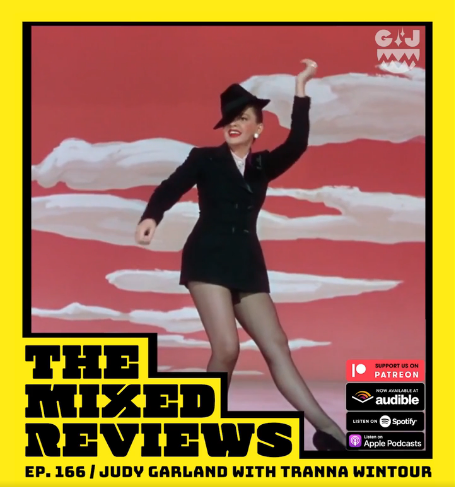
The Mixed Reviews went somewhere over the rainbow to talk about the life and works of Judy Garland along with guest Tranna Wintour. It’s sure to delight and surprise the already converted and recruit new fans to one of the most iconic and tragic gay icons of Hollywood. And The Mixed Reviews Patreon members can hear an extended episode with 30 additional minutes of discussion and clips!
Novel Gaming! first got small and then got into giant, space-faring creatures with this month’s entries. First up was playing The Legend of Zelda: The Minish Cap about the hero of Hyrule shrunk down to the size of a mouse! Then, Katie and Doug talked about the sequel to last month’s book club with this month’s book club, Escaping Exodus: Symbiosis by Nicky Drayden.
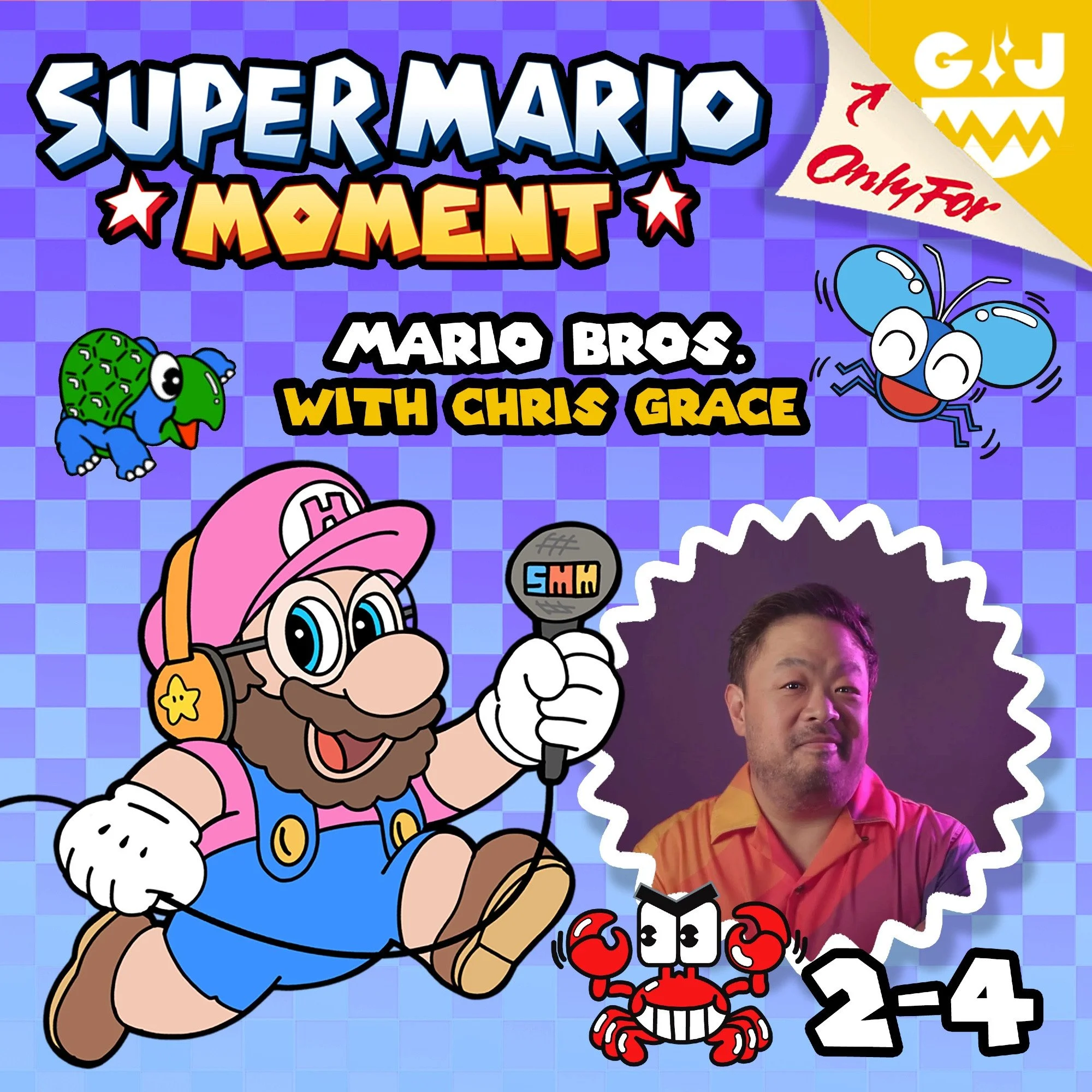
Super Mario Moment went into a feline state with our own Derek B. Gayle for Bowser’s Fury, then got 8-bit with the original Mario Bros. before they were super with Superstore star Chris Grace. Next up was a Chinese bootleg fan game called Kart Racer with guest Chris Osborne from Play Comics, and the month rounded out with a trip into Subcon with guest Drew Mackie from Thrilling Tales of Old Video Games and Gayest Episode Ever to talk Super Mario Bros. 2.
The Q Division brought in special agents Cass and Tommy from Distant Echoes: A Star Wars Podcast to talk about space and lasers in the 1979 Bond film Moonraker. A favorite character returns, and it probably won’t surprise you who it is!
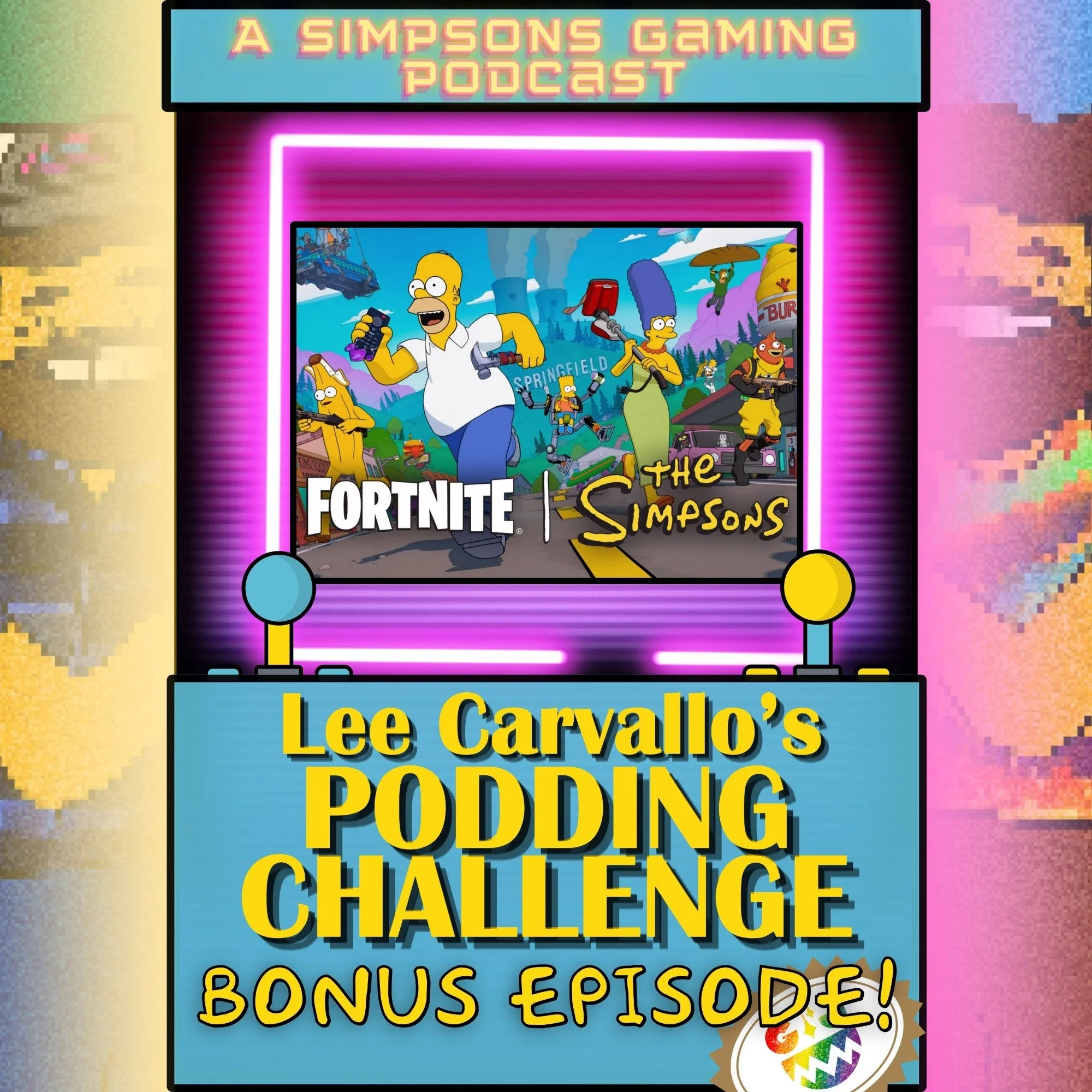
Lee Carvallo’s Podding Challenge squaded up with Doug, Hamish, and Tyler to talk about The Simpsons miniseason on Fortnite. Paraglide on Ned’s moustache as the packed panel discusses the detail that went into this limited time gaming opportunity, the Fortnite gaming model, and Marge’s hair hitbox.
Walloping Websnappers! spun up their second time covering The Spectacular Spider-Man, completing their revisit to this beloved series. Members of the Walloping Websnappers! Patreon can hear a discussion on Ultimate Spider-Man comics #9-12, and a trivia volley of what Doug and Derek remember from their own podcasts!
Gimmicks continued its fall tradition of Derek introducing David to a short-lived FOX genre show featuring a cast member from 90210 with Terminator: The Sarah Connor Chronicles and episode “Mr. Ferguson is Ill Today.” Then, in a bonus episode, they looked at the big swings of late night television. To wrap up the month, they were joined by guest Kevin Cafferty from Gleaming the Tube and The Best Stuff in the World to discuss the Saturday morning phenomenon, Pee-Wee’s Playhouse and its final clip-show episode “Playhouse for Sale.”